Joel Mokyr, Gita Chadha, Lawrence Krauss, Joseph Vijay
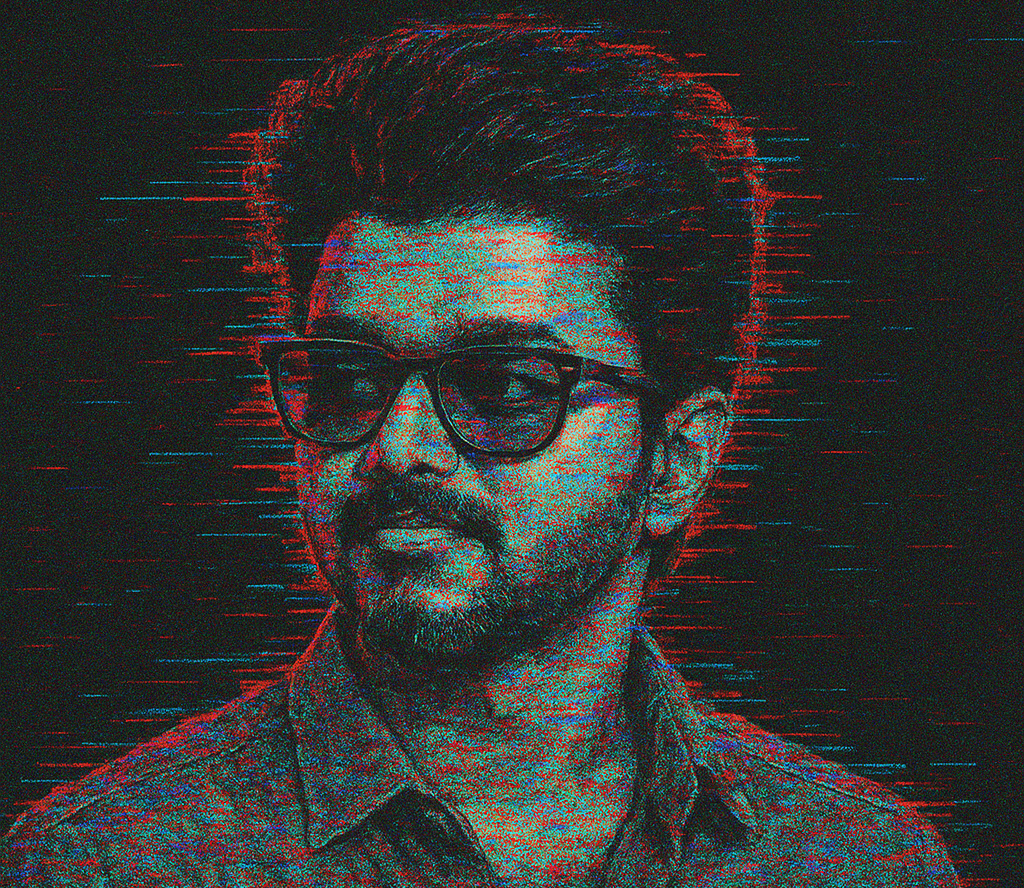
All that thinking about Joel Mokyr and his prescription to support society’s intellectual elite in order to ensure technological progress took me back to a talk Gita Chadha delivered in 2020, and to a dilemma I’d had at the time involving Lawrence Krauss. Chadha’s proposed resolution to it could in fact settle another matter I’ve been considering of late, involving Tamil actor-politician Joseph Vijay.
But first a recap. Gita Chadha is a sociologist and author, a professor at Azim Premji University, and an honorary senior fellow at the NCBS Archives. Her 2020 talk was titled ‘Exploring the idea of ‘Scientific Genius’ and its consequences’.
Lawrence M. Krauss is a cosmologist, sceptic, and author, former chair of the Board of Sponsors of the Bulletin of the Atomic Scientists, an alleged sexual predator, and a known associate (and defender) of convicted child-sex offender Jeffrey Epstein. In 2020 he was a year away from publishing a book entitled The Physics of Climate Change, combining two topics of great interest to me, but I wasn’t sure if I should read it. On the one hand there was the wisdom about separating the scholarship from the scholar but on the other I didn’t want to fill out Krauss’s wallet — or that of his publisher, who was trading on Krauss’s reputation — nor heighten the relevance of his book.
Finally, I’ve been thinking about Vijay more than I might’ve been if not for my friend, who’s a fan of Vijay the actor but not the politician. Whenever I express displeasure over her support for Vijay’s acting, she asks me to separate his films from Vijay the person, and politician. I haven’t been convinced. Is Vijay a good actor? I, like my friend, think so. My opinion of Vijay the politician declined however following the crowding disaster in Karur on September 27: while his party’s cadre whipped up a crowd whose size greatly exceeded what the location could safely hold, Vijay made a bad situation worse by first insisting on conducting a roadshow and then arriving late.
Today, I firmly believe separating the work from the person doesn’t make sense when the work itself produces the person’s power.
I first realised this when contemplating Krauss. When I asked during her talk about how we can separate the scholarship from the scholar, Chadha among other things said, “We need to critically start engaging with how the social location of a scholar impacts the kind of work that they do.” Her point was that, rather than consider whether knowledge remains usable once the person who originated it is revealed to have been unethical, we must remember prestige is never innocent: because it changes what institutions and audiences are prepared to excuse.
Broadly speaking, when society puts specific academics “on pedestals”, their eminence and the grant money they bring in become ways to excuse their harm. This is how people like Krauss were able to conduct themselves the way they did. Their work wasn’t just their contribution to the scientific knowledge of all humankind; it was also the reason for their universities to close ranks around them, in ways that the individuals also condoned, until the allegations became too inconvenient to ignore. The scholar benefited from what the scholarship was and the scholarship benefited from who the scholar was.
So a good response isn’t to pretend that it’s possible to cleanly separate the art from the artist but to pay attention to how the work builds social capital for the individual and to keep the individual — and the institutions within which they operate — from wielding that capital as a shield. Thus we must scrutinise Krauss, we must scrutinise his defenders, and we must ask ourselves why we uphold his scholarship above that of others.
(Note: We don’t have to read Krauss’s books, however. This is different from, say, the fact that we have to use Feynman diagrams in theoretical physics even as Richard Feynman was a misogynist and a creep. It doesn’t have to be one at the expense of the other; it can, and perhaps should, be both. I myself eventually decided to not read Krauss’s book: not because he defended Epstein but because I wanted to spend that time and attention on something completely new to me. I asked some friends for recommendations and that’s how I read When the Whales Leave by Yuri Rytkheu.)
The same rationale also clarified the problem I’d had with my friend’s suggestion that I separate Vijay’s work as an actor from Vijay himself. For starters: sure, an actor can play a role well and thus be deemed a good actor, but I think the sort of roles they pick to the exclusion of others ought to matter just as well to their reputation. And the parts he’s picked to play over the last decade or so have all been those of preachy alpha-males touting conservative views of women’s reproductive rights, male attitudes towards women, and retributive justice, among others. It’s also no coincidence that these morals genuflect smoothly to the pro-populist parts of his political messaging.
Similarly, Vijay’s alpha-male roles that I dislike aren’t just fictions: they’re part of the public persona that Vijay has deliberately converted into his newfound political authority. Once a ‘star’ enters electoral politics, “watching for entertainment” is hard to separate from participating in and enabling a machinery that’s generating legitimacy for the ‘star’. The tickets sold, the number of streams, the rallies attended, and the number of fans mobilised all help to manufacture the claim that Vijay has a mandate at all. As with Krauss, participation increased, and continues to increase, material power and relevance as well as paves the way to claim and probably receive immunity from the consequences of inflicting social harm.
But where the case of Vijay diverges from that of Krauss is that the former presents much less of a dilemma. When a person goes from cinema to electoral politics, separating their work from their personal identity is practically indefensible because the political leader himself is the vehicle of the power that he has cultivated through his film work. That is to say, the art and the artist are the same entity because the art fuels the artist’s social standing and the artist’s social standing fuels his particular kind of art.